Category: Meg’s Musings

  • Gardening FAQ’s – Getting Ready for Summer

    Gardening FAQ’s – Getting Ready for Summer

    [cmsms_row][cmsms_column data_width=”1/1″][cmsms_text]

    As the summer season will soon be upon us, your fellow gardening enthusiasts at BGI are ready to face the heat! The summer weather can prove to be a difficult time for plants, but we are here to help you prepare for any season. We have answered a 3 common questions that will keep your garden fresh year-round:

    Question #1: What are the best flowers to grow in summer months?

    As the temperature has increased, you may have noticed that your winter plants are beginning to decline. This is due to the fact that these plants are cool season crops which prefer temperatures below 70 degrees. Warm season crops are ideal for the hotter weather and thrive in temperatures of 65-90 degrees. Plants that are characterized as warm season crops have become more accustomed to warmer climates and are able to thrive in higher temperatures. These crops are best when planted early- to mid-May, once the threat of frost has diminished.

    When planting during the summer months, it is important to choose outdoor plants that can withstand high temperatures and increased sunlight exposure. Never fear, there are a multitude of warm season crops that you can plant this month. Vegetables and fruits, such as beans, carrots, cucumbers, peppers, corn, squash, tomatoes, citrus, watermelon, strawberries, raspberries, peaches and melons are all capable of withstanding the dry summer heat. Plants such as calla lilies, tuberous begonias, gladiolus, gardenias, roses, bottlebrush, marigolds, dahlias, baby’s breath, carnations, chrysanthemums, geraniums, rosemary, sunflowers, verbenas and sweet peas also thrive in the summer months.

    To help you maintain these summer crops, BGI offers Grow & Gain®, a concentrated all-purpose liquid fertilizer that will help your plants and vegetables flourish. BGI also suggests TOMATOGAIN®, which can be used on all vegetables and many fruits, to provide nutrients and promote growth.

    Question #2: How often should I water my plants during the summer?

    Most plants should be watered two to three times a week to promote growth. It is important that the soil maintains a moist balance between drenched and dry because jumping to each extreme is damaging to the plants. We suggest that you check the moistness of the soil between watering to protect the soil from becoming completely dry.

    Many people are unaware that the time plants are watered can also affect the growth of the garden. Watering plants in the early morning is ideal because it allows water to reach the roots with only a small amount of water lost due to evaporation. If you are unable to water in the morning, plants can also be watered in the late afternoon or early evening, which will keep the water from evaporating while also allowing time for the plants to dry before nightfall.

    We recommend SUPERGAIN® to help boost your plants drought tolerance, SUPERGAIN® works from the inside out to help strengthen your plants ability to thrive in any condition.

    Question #3: Why does my citrus tree keep dying?

    Citrus trees are commonly plagued by the loss of leaves, which is termed leaf drop. This can be caused by inadequate sunlight exposure, insects and incorrect watering. Citrus trees require at least six hours of light each day to maintain healthy growth. Citrus trees are more likely to flourish in full sunlight exposure, so if the citrus tree is inside, try moving the plant outside during the day.

    Scales, mites and other insects are a threat to citrus plants because they cause leaf, limb and trunk damage. Monitor your citrus tree and remove insects immediately with water or a small amount of rubbing alcohol.

    Citrus trees that are planted in-ground should be watered once a week while potted citrus trees should be watered when the soil begins to dry out. Over or under watering a citrus tree will leave tell-tale signs. Excessive watering will cause the tree’s leaves to turn yellow and fall off. This is caused by the rotting of the root which, in turn, will restrict water intake to the tree. Inadequate watering of a citrus tree will also cause the leaves to fall.

    BGI wants to help you keep your citrus tree living up to its full potential. CITRUSGAIN® plant food provides a simple way to maintain the nutrients that citrus trees need to produce high quality fruit.


    [/cmsms_text][/cmsms_column][/cmsms_row]

  • Happy 45th Anniversary Celebration of Earth Day from BGI

    Happy 45th Anniversary Celebration of Earth Day from BGI

    [cmsms_row][cmsms_column data_width=”1/1″][cmsms_text]

    5 Small Ways to Make a BIG Difference

    The history behind Earth Day is an interesting story. The first Earth Day celebration took place in 1970 uniting more than 20 million participants from colleges and universities, primary and secondary schools and hundreds of communities throughout the United States in the common mission of environmental reform.

    Today, Earth Day is now known as “the largest secular holiday in the world” and is celebrated in more than 192 countries with participation from 1 billion people each year! This annual event is a wonderful time to take a step back from our accustomed modern-day lives and remind ourselves of the importance of environmental protection and how we can each play an important role in protecting our Earth.

    Want to help? Here are a 5 simple things you can do in your home gardening practices year-round that can make a BIG difference!


    Earth Day Tip #1: Buy plants with biodegradable pots

    A simple, yet often forgotten method of sustainability are biodegradable pots. Our day-to-day containers are just simply not good for the environment. Plastics and papers can end up in landfills when not properly recycled or reused. Even worse, these items out live humans and exist in the environment for thousands of years, where they indefinitely become harmful to nature and wildlife.

    What can you do? Biodegradable pots are available in your local nursery and garden centers. Natural, hygienic and fully biodegradable, these pots can be planted right along with your plants and flowers!

    Earth Day Tip #2: Conserve Water where possible (harvest rainwater)

    There are many ways to conserve water resources by harvesting rainwater, from more sophisticated methods to simple and inexpensive ways.

    What can you do?  Divert rainfall from its journey into the storm drains by this simple method: Connect a barrel with pipes through the gutters on your roof to collect this supplemental water that normally goes to waste and use it to water indoor plants and landscaping during times of low rainfall!

    Earth Day Tip #3: Support Local Farmers

    This is an easy one; every city has local farmers markets. The food found at a local farmers market is not only better for you and the environment, it is often less expensive than the grocery store! In addition, this food aids in the support local families whose main source of income is their farm.

    What can you do?  Simply shop at your local Farmers Market! Local food markets use less electricity than traditional grocery stores and typically utilize the natural outdoor areas to showcase products to shoppers. These markets also help build a community and is a great activity for families to enjoy together that promotes overall health and wellbeing.

    Earth Day Tip #4: Use Native and Indigenous plants

    Landscaping with native wildflowers and grasses can help improve the environment. How you ask? These are the plants native to your environment and thrive in the climate that naturally exists. These plants reduce maintenance of water and more importantly, decrease the need for herbicides and pesticides.

    What can you do?  Ask your local garden center what plants are best for your area, thereby reducing the natural resources and herbicides and pesticides needed.

    Earth Day Tip #5: Attract birds and friendly bugs

    Did you know? Naturally attracting beneficial garden bugs and birds is a great way to avoid the use of pesticides that may be dangerous to the environment and our overall health. These creatures create a wonderful balance in your garden and often eliminate the unwanted types of bugs in your garden that cause the most damage.

    What can you do? At BGI, we suggest creating a backyard bird-friendly habitat with a variety of plants, trees, vines and shrubs that create a variety of food offerings. This will also provide a place where birds can take comfort. Visit your local garden center to check out the options available for attracting the desired birds and bugs.

    [/cmsms_text][/cmsms_column][/cmsms_row]

  • Bougainvillea Preferred for Allergy Sufferers

    Bougainvillea Preferred for Allergy Sufferers

    [cmsms_row][cmsms_column data_width=”1/1″][cmsms_text]

    According to the American Academy of Allergy, Asthma, and Immunology, allergy sufferers can still enjoy time in their garden by choosing better less allergy-provoking choices like azalea, begonia, bougainvillea, cacti daffodil, daisy, dahlia, gladiola, Irish moss, iris, lily, marigold, narcissus, orchid, pansy, petunia, snapdragon, sunflower, tulip, violet, and zinnias. Allergy producing plants to avoid includes amaranthus, coneflower, crocus, elderberry, juniper, peony, poppy, and privet.

    Bougainvillea are less allergy-provoking due to the fact that its “flowers” are actually the small, white, tubular flowers in the center of the colorful bracts.  Inside each flower, you’ll find very little pollen compared to other flowering plants.

    Seven more “survival” tips for the gardener include:

    1. Planting female trees in one’s own yard which will attract and then trap incoming airborne pollen from male plants.
    2. Keeping high pollen-producing plants away from the doors of your home as well as bedroom windows.
    3. Keeping pets away from plants or trees. They may rub against a plant or sit under a tree and the pollens may adhere to their fur.
    4. Wearing a pollen mask while gardening.
    5. Washing/showering/shampooing after spending time outdoors to reduce amount of environmental seasonal allergens being transferred into your home.
    6. Planning outdoor time for rainy, wet, cloudy and windless days, which usually have lower pollen counts.
    7. Keeping grass cut short.

    [/cmsms_text][/cmsms_column][/cmsms_row]
  • Fall Gardening is Here!

    Fall Gardening is Here!

    [cmsms_row][cmsms_column data_width=”1/1″][cmsms_text]

    It’s September, which means fall gardening is here!  Not only am I looking forward to seeing color on my bougainvillea again, but I’m excited to start planting my cool weather vegetables like eggplant, spinach, and broccoli.  For those with vegetable gardens, preparing for fall gardening begins by:

    • Taking out any remaining veggie plants.
    • Thoroughly weeding your garden and yard.
    • Adding fresh soil, compost, or manures and turning and aerating the soil.
    • Introducing a new tribe of earthworms to your garden soil to help the enrichment process.

    For bougainvillea, the first week in September should be the last time you prune or perform a hard cut.  Prepare your bougainvillea for shorter days and cooler nights by:

    • Beginning to cut down on the amount of water for your bougainvillea.  Less water, cooler and longer evening will induce flower bud set and help to enhance bract production – which means more color.
    • Water your bougainvillea when the top inch of the soil is dry, and then water only sparingly.
    • Once buds appear, water as needed, and apply Bougain fertilizer monthly.

    For those living in zones 8 and below, prepare to bring your bougainvillea indoors.  Perform your last hard prune this month, and start to think about where you will keep your bougainvillea indoors.  Any space which doesn’t freeze will be fine for your bougainvillea while indoors.  Learn more about wintering over your bougainvillea on our website, so you’ll have a healthy bougainvillea plant for next Spring!

    [/cmsms_text][/cmsms_column][/cmsms_row]
  • BGI Select Quick-Draining Soil

    quick draining soilSoil is an important part of plant growth, and sometimes it is not given as much importance as it should. Quality of soil helps determine how the plant grows. Bougainvillea and other plants like cacti, bonsai trees, and even watermelons are all examples of xerophytic plants, with a low moisture requirement.

    Well-drained soil allows water to be added to the pot, and is able to soak in evenly, and lets excess water flow easily from the drainage holes at the bottom of the pot.  With that said, it is very important to keep the drainage holes clear at all times. One option is to place a few pebbles at the bottom of the pot, to ensure that the holes do not become congested with excess soil.  If you wish for your plant to grow, do not pot your xerophytic plant in a container with no holes.

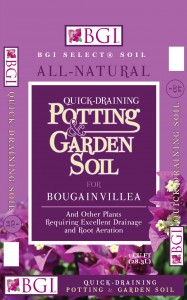
    Plants such as bougainvilleas that need excellent drainage, as well as to aerate their roots are perfect candidates for BGI’s Select Quick-Draining Soil. BGI’s Select Quick-draining soil is made to allow plant roots to breathe. These plants do not need to have a soil that absorbs a lot of water, on the contrary, too much water (or a waterlogged soil) will be damaging to the growth and progress of your succulent plants.

    BGI Select Quick-Draining Soil is an all-natural mixture of pine bark, Canadian peat, Florida peat, and dolomite.

    In order to drain well, soil should have large air spaces. Consistent moisture levels are important to maintain in order to help your plants grow. BGI’s Select Quick-Draining Soil drains soil well enough to avert the constant saturated effect but at the same time does not require its caretaker to water everyday.

    [button link=”http://www.bgi-usa.com/store/#!/~/product/category=1643774&id=8136463″ variation=”hot_pink”]Buy Now[/button] Place your BGI Select Quick-Draining Soil order today!

  • PalmGain Palm Tree Fertilizer

    Palm Plant FertilizerDifferent species of plants have unique fertilizer requirements. Palm tree fertilizer, fern fertilizer, ixoras fertilizer, cycad fertilizer, and ornamentals fertilizer needs can all be cared for by one product, PalmGain 8-2-12 palm fertilizer. These attractive plants require a fertilizer which is a mixture of iron, nitrogen, potassium, sulfur, magnesium and other minerals and nutrients in high amounts. When properly fertilized, these plants will take on the radiant hues and luscious green, which signifies a healthy plant. PalmGain takes the mystery out of fertilizing these varieties of plants.

    A palm tree has special needs and fertilizing too much or not enough can cause damage to the tree. Trees may not grow properly if they do not have adequate amounts of specific minerals and nutrients. When planting a palm tree, wait approximately 4 to 6 weeks, to make sure that water and soil are in balance and to avoid transplant shock. Care should be taken when fertilizing a palm tree, gently work the dry fertilizer into the soil away from the trunk and away from the delicate roots. The soil must be moist, not dry and the palm needs to be watered after the fertilizer is applied. A tree will exhibit various signs of illness, if it is deficient in any of the major chemical and nutritional elements. Using a well balanced palm tree fertilizer can eliminate these problems.

    Stop going out to buy specialty fern fertilizer, ixoras fertilizer, cycad fertilizer, ornamental fertilizer and other treatments, when PalmGain will supply the perfect formula. Ferns, ixoras, cycad and other plants of this type have similar nutritional needs, the same as palms. Plants, which receive proper care, will thrive, but it is essential to understand their nutritional requirements. PalmGain can give plants the support needed to be healthy, with lush vegetation. When helping palms and plants with similar needs, trust the fertilizer, which will make them flourish.

    Place your PalmGain order today

  • All Purpose Liquid Fertilizer

    Grow & Gain

    Grow & Gain is an all-purpose liquid fertilizer that contains an ideal mix of nutrients and beneficial ingredients for your lawn, garden and trees.

    The concentrated formula boosts the strength and maturity of both indoor and outdoor plants. This liquid fertilizercontains organic acids and chelated micronutrients that support plant nourishment, foliage health and flower growth.Grow & Gain’s spray fertilizer is easy to use and helps plants flourish by improving their absorption of nutrients, resistances and growth rate.The fast-acting liquid fertilizernourishes your plants’ roots, soil, stems, foliage, flowers and fruits. The gentle organic acids create a neutral environment in which your plants may flourish. These acids help with nutrient absorption while enriching the soil and improving water retention.Chelated micronutrients are essential to plant nourishment and are easier for all types of plants to absorb. The ingredients improve the soil and provide more efficient absorption of water and nutrients. By using this spray fertilizer for your vegetation needs, you will achieve healthy lawns, fruitful harvests, rich foliage, beautiful flowers and durable roots that mature quickly. Garden plants need treatment only once every two weeks, and trees thrive from monthly applications.

    Grow & Gain all-purpose liquid fertilizer is available at popular retail stores like Home Depot and Costco. You can also purchase this beneficial all-purpose liquid fertilizer now from the convenient online shopping cart.

  • Hibiscus Fertilizer

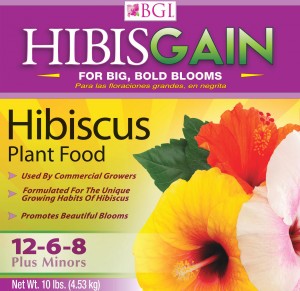
    Hibiscus FertilizerHibiscus plants are native to tropical climates and will thrive in hot and humid conditions year round. However, many plant enthusiasts have successfully grown the hardy hibiscus varieties in colder zones of the country as well. It may be difficult for amateur gardeners to distinct which type of hibiscus tree they own. The easiest way is to observe the hibiscus flower. This plant will produce enormously large flowers with multiple colors in tropical varieties, and smaller blossoms with one color in hardy climates. These plants will have to be stored inside during the winter in cooler weather zones. However, the perennial hibiscus can be cultivated in any climate with appropriate care.

    Very effective drainage will become a major part of your regular hibiscus care. Special mixes of perlite, peat moss, bark and soil are available at many garden centers.  The use of ordinary garden soil is not recommended. You must pay close attention to the ingredients listed on hibiscus fertilizer labels. Hibiscus fertilization is suggested in frequent small doses. Heavy fertilization will destroy the roots of the plant and ultimately diminish the chances of the plant’s survival. The most effective fertilizing product currently on the market is HibisGain. The same principles apply when using this type of plant nourishment. Small dosages will ensure continuous growth and annual existence. Great care must be implemented with the application of HibisGain. The granules should be spread evenly around the plant without leaving any of the fertilizer remaining on the leaves or the blossoms. This method will prevent any injury to the delicate structure of the plant. The soil immediately surrounding the hibiscus plant should be soaked with water before any application. Supplemental fertilizing products can be used along with the HibisGain to guarantee successful results. Presently, this new product is sold within the United States only and any international orders cannot be accepted.