Category: In The News

  • BGI introduces SuperGain Plant Food Supplement

    Article featured in Southwest Florida Business Today

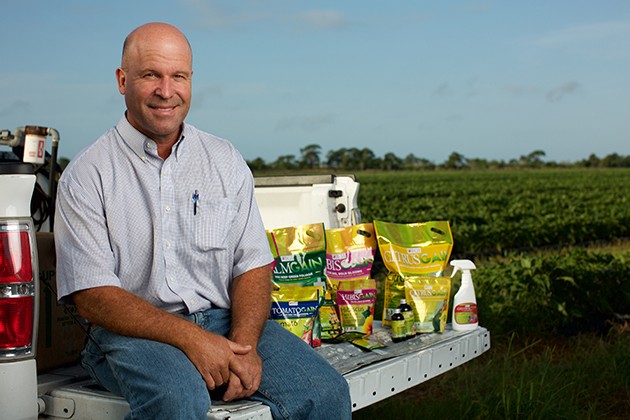
    SUPERGAIN-4oz-0Bougainvillea Growers International (BGI), a Southwest Florida-based manufacturer and distributor of fertilizers, plant foods and plant food supplements, introduces SuperGain, a new-to-market natural and organic-based plant food supplement designed for all types of vegetation, including ornamental plants, interior plants, turf, trees, vegetables, fruits and citrus. BGI was founded in 1994 as a five-acre bougainvillea nursery in Boynton Beach, Florida that grew to more than 67 acres. After growing more than 30 varieties of bougainvillea, BGI expanded to St. James City in 2006. In 2012, BGI embarked on a new venture to focus on producing and distributing GAIN fertilizers and products, which include species-specific varieties such as BouGain, HibisGain and PalmGain. BGI’s GAIN fertilizers are sold online, in Home Depot stores and at home and garden centers throughout the U.S.

    SuperGain is an organic-based, premium plant performance activator that contains more than 400 natural, beneficial plant-based supplements designed to activate specific physiological capabilities in both indoor and outdoor plants such as root development, flowering and drought resistance. The use of SuperGain on agronomic crops has been shown to lead to double-digit percentage yield increases. SuperGain is food-quality formulated and safe to use on vegetables and fruits, and it is available in 4 oz. and 8 oz. bottles that can be applied in a foliar spray or soil drench mix. SuperGain is now available at Home Depot stores, local home and garden centers and online at www.BGI-USA.com and Amazon.com. Prices for SuperGain start at less than $10 for a 4 oz. bottle.

    “With SuperGain, we’ve developed an easy-to-use and inexpensive plant food supplement that acts on plants at the genetic level to improve their root development, chlorophyll production, drought and salt tolerance, and most importantly, yield and appearance,” said Tom Scannell, owner and founder of BGI. “We’ve used the combination of multiple patented products, deep international research and decades of growing experience to design a product that can safely and effectively help you grow bigger, lusher, higher-yielding plants.”

    Scannell, who holds a degree in soil science from the University of Wisconsin-Madison, began his career growing cotton and rice in the Mississippi Delta before moving to Florida, where he became a master bougainvillea grower in the southeastern U.S.

    “As we worked to cultivate beautiful, lush bougainvillea, BGI developed a fertilizer specifically designed to tackle the unique nutritional and environmental challenges posed by bougainvillea cultivation,” said Scannell. “Our first fertilizer product, BouGain, was an instant success with bougainvillea growers.”

    BGI offers the highest quality products to landscape professionals, including architects, designers and contractors. BGI products are used at Busch Gardens, Disney World and the Edison and Ford Winter Estates. BGI is headquartered at 7401 Stringfellow Rd. in St. James City, Florida, and the BGI manufacturing facility is located at 1221 S.E. 9th Terrace in Cape Coral, Florida. For more information on BGI, visit www.BGI-USA.com or call 561-374-9216.

    Click here to view the clip about BGI SuperGain in SWFL Business Today! 

  • Feed Me: Featuring Tom Scannell, Owner of BGI

    Feed Me: Featuring Tom Scannell, Owner of BGI

    A Business Observer Story by Jean Gruss 

    Bougainvillea plants are notoriously difficult to grow because of their sensitivity to water and weak root system.

    So when commercial nurseries saw the beauty of Tom Scannell’s bougainvillea, they started buying what he was feeding his plants. “We just used it in-house for our own products,” Scannell says.

    Scannell’s plant-food sales have been so successful that Scannell got out of the bougainvillea-growing business in 2012. Today, Bougainvillea Growers International sells plant food such as BouGain and supplements such as SuperGain through retailers such as Home Depot and to horticulturalists at Busch Gardens and Disney World.

    Scannell declines to cite the company’s revenues, but he says his 67-acre bougainvillea farm posted gross revenues of $7 million a year, employed 94 people and had 17 delivery trucks before he sold it.

    Fact is, farming is risky business. “It only takes one bad season and you’re out,” Scannell says. By contrast, the plant-food business is more secure.

    Scannell developed the plant food himself, using his background as a commercial farmer and his degree in soil science from the University of Wisconsin at Madison. “I’ve tried hundreds of fertilizers,” he says.

    He gleaned the latest research from cutting-edge agriculture scientists at Cornell University, University of California-Davis and Michigan State University. “It’s like open-source code for ag,” he smiles.

    Scannell, who lives in St. James City, an agriculture hamlet on Pine Island in Lee County, says his company’s sales have doubled since 2012. He’s particularly excited about selling through Amazon.com, where he’s posted sales growth 262% year over year to March. “Our sales went through the roof,” he says.

    Gain fertilizers are attractively packaged in shiny bags that light up a usually dreary and smelly area of most garden centers. Scannell is fond of quoting a Home Depot buyer who once told him: “You’ve got to be showroom ready every day.”

    Scannell gained a foothold in Home Depot because he used to sell the company bougainvillea plants. “When we switched from live goods to hard goods, the relationship remained,” he says.

    Better known by its initials BGI, the company’s 4,000-square-foot warehouse in Cape Coral is stacked to the ceiling. Scannell says he needs double the space to expand. He’s considering a subscription service for fertilizer and supplements that can be sold with plants, among other ideas.

    But Scannell, 53, a busy father with seven daughters, wants to grow his company carefully and gradually. “I don’t want to compete with Scotts because I’ll lose,” he says. The Scotts Miracle-Gro Co. is the publicly traded goliath of the industry with $2.8 billion in annual sales. “My goal is to grow 20% a year,” Scannell says.

    Scannell has been there, done that. From 1986 to 2001, he borrowed to grow cotton, rice, soybeans, wheat and corn on 3,000 acres in Northeast Louisiana and Southeast Arkansas. But Scannell candidly confides why he’s not keen on debt or outside investors: “I don’t want to be told what to do,” he smiles.

    Follow Jean Gruss on Twitter @JeanGruss
    View the story on Business Observer’s Website

  • Research Pays as Grower Turns to Fertilizer Maker

    BGI-USA was recently featured in the News-Press of Fort Myers in a story behind the business and what makes the GAIN family of products so unique. Read more below or visit their website to view full article: BGI USA in the News-Press

    Written by Don Ruane, Special to the News-Press

    Tom Scannell is a patient yet persistent businessman and scientist.

    Armed with a soil science degree and 20 years of experience farming row crops in the Mississippi delta, he worked six years to come up with a plant food formula to make bougainvillea blossoms pop with color and hardiness.

    But after that he realized there is a better way to get fast results — and he turned to the nation’s land grant universities and growers he’d met over the years. He’s used their years of research and experimentation to make the jump from one of the biggest bougainvillea growers in the country to a budding supplier of specialized plant foods providing a full range of nutrients.

    The product line is known as GAIN fertilizers. He sells wholesale only; homeowners can get the products from Home Depot, garden centers, landscapers and other professionals. The species specific plant foods are marketed under names such as BOUGAIN, TOMATOGAIN, PALMGAIN and HIBISGAIN.

    A new supplement to the foods called SUPERGAIN is just now hitting the market. All of the products are bagged and shipped from BGI Inc.’s warehouse south of Viscaya Parkway in Cape Coral’s industrial park.

    Your Farm and Garden, a 3.5 acre nursery in Sarasota, uses the products on its plants and sells them to its customers, said manager James Vowels.

    “It’s one or our highly recommended synthetic fertilizers. It’s specifically formulated for certain plants,” Vowels said. That makes the GAIN products perfect for each plant and a popular item for his customers, he said.

    Scannell began his climb to business ownership in his youth when his mother introduced him to the symmetry and beauty of gardens. Something clicked in him.

    “I knew what I wanted to do when I was 15,” said Scannell, who easily summons quotes about beauty and plants.

    “My greatest masterpiece is my garden,” said Scannell, quoting the celebrated French impressionist artist Claude Monet from the 19th century.

    Daniel Berrigan, a priest, Vietnam War protestor and peace activist who served time in prison for destroying draft records, wrote “Tulips in the Prison Yard,” Scannell said. “He found beauty in a cold hard place,” Scannell said.

    There is a divine presence in plants, according to Scannell, and his business is about bringing out their beauty in every way from packaging to blooms. It helps people find beauty in their lives, he said.

    With a sense of the divine in his heart and his college degree in his pocket, Scannell began a 15-year run of farming in the Mississippi delta. Then he moved to Delray Beach and began looking for opportunities in the plant world.

    “I searched around and discovered bougainvillea. So I went into that,” Scannell said. That was in 1994 when he launched Bougainvillea Growers International. Over the next 20 years he developed more than 30 types of bougainvillea and became one of the nation’s leading bougainvillea dealers. He moved the business to Lee County in 2012 and started a row crop farm near St. James City.

    “From there I pivoted into the plant food business,” Scannell said. He noticed in big box garden centers that gardeners were not getting the same plant food products professionals use.

    “The homeowners were just getting the generic item without the balanced nutrients,” Scannell said. He asked himself, “Why aren’t homeowners using what the professionals use?”

    He set about developing products that would help homeowners.

    “I don’t invent. I just go to the best places I can think of,” Scannell said. He approached the land grant universities with agriculture programs and tapped into research that spanned years. He consulted with friends in the world of agriculture. He came up with nutrient-rich products blended for specific species as well as general applications.

    “These are university researched and more importantly grower researched,” Scannell said.


  • Introducing SuperGain Plant Food Supplement

    SuperGain - Plant Food SupplementBGI is proud to introduce SuperGain, a new-to-market natural and organic-based plant food supplement designed for all types of vegetation, including ornamental plants, interior plants, turf, trees, vegetables, fruits and citrus.

    Plant Food Supplement SuperGain is an organic-based, premium plant performance activator that contains more than 400 natural, beneficial plant-based supplements designed to activate specific physiological capabilities in both indoor and outdoor plants such as root development, flowering and drought resistance. The use of SuperGain on agronomic crops has been shown to lead to double-digit percentage yield increases. SuperGain is food-quality formulated and safe to use on vegetables and fruits, and it is available in 4 oz. and 8 oz. bottles that can be applied in a foliar spray or soil drench mix. SuperGain is now available at Home Depot stores, local home and garden centers and online at www.BGI-USA.com and Amazon.com. Prices for SuperGain start at less than $10 for a 4 oz. bottle.

    “With SuperGain, we’ve developed an easy-to-use and inexpensive plant food supplement that acts on plants at the genetic level to improve their root development, chlorophyll production, drought and salt tolerance, and most importantly, yield and appearance,” said Tom Scannell, our owner and founder. “We’ve used the combination of multiple patented products, deep international research and decades of growing experience to design a product that can safely and effectively help you grow bigger, lusher, higher-yielding plants.”

  • PARK(ing) Day 2009

    PARK(ing) Day

    On September 18, 2009, artists, activists and citizens from cities around the globe will temporarily transform metered parking spaces into public parks and other social spaces, as part of an annual event called “PARK(ing) Day”. Perhaps you’ve already heard of it, or participate in this global event.  I just recently heard about it from Steven Davis, ASLA, a landscape architect from Fruit Cove, Florida, and thought it was a really neat idea!  He’ll be setting up this week at the corner of Ocean Street at Bay Street in downtown Jacksonville.  We were happy to donate our bougainvillea to this event intended to promote creativity and civic engagement.

    For more information, or to participate in next year’s event – visit  www.parkingday.org

  • Bougainvillea ‘Helen Johnson’ Makes the List

    Bougainvillea ‘Helen Johnson’ Dwarf provides a deep pink shade of the medium pink, silken blooms of the Pink Powder Puff tree (Calliandra surinamensis) in this landscape.

    Bougainvillea ‘Helen Johnson’ makes Michael Spencer’s list of the 41 structural shrubs that belong in every designer’s Plant Book. Mr. Spencer, ASLA, has been practicing landscape architecture for 25 years and is the president of MSA Design in Naples, Florida. He recently wrote an article titled, “Make it Green: ‘Structural’ Stock”, that discusses the distinction between the “structural” plants and – well, all the others.

    Mr. Spencer explains that the idea of structural plants is simple, and that “any garden or planting project requires an overall structure to carry the conceptual load”. He points out examples of structural plants sometimes being “hedges around parking lots (which are required), or a hedge down your property line to screen that nice neighbor’s purple house, or a planting in front of your air conditioner”.

    Other structural stock includes shade trees or palm groupings. Not only do they provide beneficial shade and reduction of heat load, but they also create micro-climates where shade-loving plants can thrive. Another structural element is foundation plantings, which Mr. Spencer states, “are widely understood to be planted around the building, at the foundation, as a sort of du rigour initial planting”.

    Thank you, Mr. Spencer , for promoting the use of this showy, dwarf bougainvillea as part of your Plant Book!

    You can check out the full article at
    http://www.naplesnews.com/news/2009/aug/21/make-it-green-structural-stock-build-sturdy-landsc/

  • Bougainvillea Growers International Ships Bougainvillea Without Shattering

    By PR News Wire
    Dec. 12, 2008

    The largest wholesale bougainvillea grower in the country, Bougainvillea Growers International (BGI), has discovered the secret to shipping bougainvillea by using a mix of proprietary bloom inhibitors in conjunction with a strict selection process. Located in Palm Beach County, BGI has been working for over fourteen years to address the problem of bougainvillea shattering, or dropping their colorful bracts, while in transit for days in an enclosed truck.

    “This capability to ship retail-ready bougainvillea across the continent creates incredible opportunities for everyone. It is a treat for all of us, and also really fun to change the dynamics and paradigm of an old industry,” says Tom Scannell, owner of BGI. “We don’t just grow plants – we create beauty and joy in people’s lives!”

    BGI’s shippable bougainvillea saves customers time and money because they are retail-ready as soon as they land. This eliminates weeks or even months previously needed in the Fall to re-grow new blooms in time for Spring. BGI also takes the worry out of whether they will be blooming in time for Mother’s Day. Now garden centers across the country can receive bougainvillea in full bloom and sell-out in the same week!

    Many customers have already benefited from BGI’s shippable bougainvillea. Bell Nursery, a leading wholesale production nursery, became a customer after receiving a sample order to test the color retention. “The plants sat on my porch for a week and still kept its color after shipping,” said Mike McCarthy, co-owner, Bell Nursery. Even Canada is no longer out of reach for tropical bougainvillea. BGI’s newest customer, Salisbury Greenhouse in Alberta, Canada is over 3,000 miles from Florida, and one week by truck. “Plants arrived perfect after being on a truck for seven days,” said Rob Sproule, co-owner, Salisbury Greenhouse. “BGI has a problem on their hands – fulfilling future orders.”

    Founded in 1994, BGI is the leader in wholesale bougainvillea production for the major chain “big box” stores, independently-owned garden centers, and landscape professionals. The company offers a wide range of bougainvillea products designed to bring beauty to the end consumer, including Bougain®, the only bougainvillea fertilizer on the market today. The largest online bougainvillea care resource can be found at their website www.bgi-usa.com.

    ###

  • Bougainvillea Growers International Ships Bougainvillea Without Shattering

    By PR News Wire
    Dec. 12, 2008

    The largest wholesale bougainvillea grower in the country, Bougainvillea Growers International (BGI), has discovered the secret to shipping bougainvillea by using a mix of proprietary bloom inhibitors in conjunction with a strict selection process. Located in Palm Beach County, BGI has been working for over fourteen years to address the problem of bougainvillea shattering, or dropping their colorful bracts, while in transit for days in an enclosed truck.

    “This capability to ship retail-ready bougainvillea across the continent creates incredible opportunities for everyone. It is a treat for all of us, and also really fun to change the dynamics and paradigm of an old industry,” says Tom Scannell, owner of BGI. “We don’t just grow plants – we create beauty and joy in people’s lives!”

    BGI’s shippable bougainvillea saves customers time and money because they are retail-ready as soon as they land. This eliminates weeks or even months previously needed in the Fall to re-grow new blooms in time for Spring. BGI also takes the worry out of whether they will be blooming in time for Mother’s Day. Now garden centers across the country can receive bougainvillea in full bloom and sell-out in the same week!

    Many customers have already benefited from BGI’s shippable bougainvillea. Bell Nursery, a leading wholesale production nursery, became a customer after receiving a sample order to test the color retention. “The plants sat on my porch for a week and still kept its color after shipping,” said Mike McCarthy, co-owner, Bell Nursery. Even Canada is no longer out of reach for tropical bougainvillea. BGI’s newest customer, Salisbury Greenhouse in Alberta, Canada is over 3,000 miles from Florida, and one week by truck. “Plants arrived perfect after being on a truck for seven days,” said Rob Sproule, co-owner, Salisbury Greenhouse. “BGI has a problem on their hands – fulfilling future orders.”

    Founded in 1994, BGI is the leader in wholesale bougainvillea production for the major chain “big box” stores, independently-owned garden centers, and landscape professionals. The company offers a wide range of bougainvillea products designed to bring beauty to the end consumer, including Bougain®, the only bougainvillea fertilizer on the market today. The largest online bougainvillea care resource can be found at their website www.bgi-usa.com.

    ###

  • Overwintering Tender Plants

    By Kathi LaLiberte

    Bougainvillea, jasmine, mandevilla, banana, agapanthus and taro. Nowadays, you can find most of these and many other tropical beauties at local garden centers. Gardeners in nearly every growing are enjoying the thrill of growing heat-loving plants in their gardens and on their decks or patios. What a wonderful new palette of plants to get to know and love!

    But what happens to these cold-sensitive plants when fall comes around? The easiest solution is to bid a sad adieu, let the frost claim its victims, and send the blackened plants to the compost pile. But most gardeners are too tender-hearted—and thrifty—to let a good plant go to waste. If you grew a few tropical plants in your garden this summer and want to try your hand at keeping them alive indoors until next spring, you have three options:

    Keep the plant in active growth in a warm, sunny place (like a sunroom or heated greenhouse).

    Take cuttings and allow the “mother” plant to die. Root the cuttings and pot them up so you have new plants in the spring.

    Allow the plant to go dormant and keep it in a cool, dark place until spring.

    Overwintering Techniques

    • Overwinter as houseplants: cordyline, phormium, palms, croton, bamboo, jasmine, allamanda, bougainvillea, hibiscus, citrus
    • Keep plant dormant in a cool, dark place: brugmansia, banana, dwarf canna
    • Store dormant bulbs/corms/tubers: ginger, sweet potato vine, colocasia, caladium, canna, calla

    1. Keeping Your Plants In Growth Mode

    If you have a sunny window where the air temperature stays about 60-70 degrees, you can keep most tropicals growing and possibly even blooming right through the winter. Bougainvillea, jasmine, citrus, hibiscus and geraniums are some of the plants that will be happy in this situation, as long as they get plenty of light, and nighttime temperatures don’t drop below 40 degrees. Plants that are relatively small will be happy to spend the winter under a grow light. Set a timer to ensure they get about 12 hours of light each day.

    Make sure to bring these plants into your house or sunroom before the weather turns cold and definitely before frost threatens. Expect that the plants will drop some leaves the first few months as they adjust to living indoors. Water as needed, but keep the soil on the dry side. Avoid crowding, because good air circulation will help deter pest and disease problems (try running a small oscillating fan for several hours each day). If possible, keep the humidity level between 30 and 45 percent by misting or placing a pan of water among the plants. In cold climates, keep the humidity below 30 percent to avoid condensation on your windows.

    Keep in mind that the ideal winter environment for most of these tropical plants would be approximately 50 degrees at night and 65 degrees during the day. Warmer air temperatures can lead to leggy growth and bug problems. Whiteflies, spider mites and scale are the most common indoor pests. Check your plants weekly. If you stay on top of the situation, pests can usually be controlled quite easily with insecticidal soap. For serious infestations, dunk the foliage in a dishpan filled with water and a teaspoon of liquid dishwashing detergent. You can also stick large plants right in the shower. Let the foiage dry and then douse with insecticidal soap.

    Tropical plants that go through the winter in fairly active growth usually benefit from being pruned at least once or twice. This will re-balance the foliage to root mass ratio and will also give you the opportunity to root some new cuttings. Coleus, plectranthus and geraniums respond well to this treatment. When spring comes, repot the plants and start fertilizing.

    2. Taking Cuttings

    Herbaceous, soft-stemmed tropicals such as plectranthus, coleus and geraniums, can be difficult to overwinter. A good option is to take cuttings in the fall and let the “mother” plant die. Root the cuttings in water on a windowsill. Be sure to root succulent, young stems—not stems that have become tough or woody. Put only the stem—no leaves—in the water. Once roots have developed, plant each cuttings in a 3- or 4-inch pot and keep them on a windowsill or under lights. Fertilize regularly. You’ll have a whole batch of new plants for your spring garden, and will be a popular guest at next year’s plant swaps!

    3. Managing Winter Dormancy

    Some tropicals do best with—or may even require—a winter rest. How you care for these plants over the winter depends on the kind of space you have available, and whether the plants are soft-stemmed, woody, or bulb-like. Tropical plants that grow from bulbs or tubers, such as elephant ears, caladium, sweet potato vine and canna lily, should get nipped by frost before they’re brought indoors. This sends the plant a clear message that the end of the season has come. At this point you can do one of two things. You can leave the plants right in their pots over the winter, keeping the soil barely moist, and store the whole pot in a cool, dark place. Or, you can trim off the stems, dig up the bulbs, label them, wrap individually in slightly moistened newspaper or peat moss, place them in a black plastic garbage bag and store a cool, dark place. In either case, it is important that air temperatures remain at about 40 to 50 degrees F. Check the bulbs monthly to make sure they are still firm and solid. If they are drying out, mist the storage material around them with a little water. When spring arrives, repot the bulbs, begin fertilizing regularly, and put the plant in a sunny window.

    Woody-stemmed tropicals, such as jasmine, brugmansia, tibouchina and bananas, should be brought indoors before the first frost. Let the plants rest in a cool place (40 to 50 degrees F) with little or no light—they’ll get the message that winter has arrived and their leaves will gradually yellow and drop. The plants can then spend the winter in an unheated basement, root cellar, unheated garage, or even a cool closet. Make sure the area is relatively dark (try enclosing the whole pot loosely inside a heavy black trash bag) and that the air temperature stays above freezing. In most cases, woody-stemmed tropicals should not be cut back until early spring (unless you can’t fit them into the house!). Water the plants sparingly throughout the winter, checking monthly to see that the soil is barely moist. When early spring arrives, revive the plants by repotting them in fresh soil. Water thoroughly and provide a weak dose of liquid fertilizer. Expose the plants to bright, filtered light, gradually acclimating them to full sun. Try to give them about a month of indoor (or greenhouse) growing time before moving them outdoors.

    When it comes to reintroducing heat-loving tropicals to the outdoors, always do it slowly. Shield them from direct sunlight and wind for at least a week or two. If the plants are acclimated slowly, they’ll slide right into active growth. Too much early spring stress will stunt the plant’s growth—or even kill it.

    The truth is, overwintering tropical plants involves a bit of trial and error. A technique that works well for one type of plant or in one particular winter environment may not be ideal for another. Be prepared to lose a few plants. See the box called Overwintering Techniques, above, for some general recommendations to get you started. For specific information about growing and overwintering more than 100 tropical plants, consider investing in the book Hot Plants for Cool Climates by Susan A. Roth and Dennis Schrader. (Houghton Mifflin 2000).

  • Bring Plants Indoors, Wrap Up Containers

    By Christina Da Silva

    Shorter days and the arrival cooler temperatures should have condo gardeners scurrying around getting ready for winter.

    Now is the time to bring herbs, tender perennials and balmy tropicals indoors and to insulate outdoor containers. With frost on the way, the tropicals – hibiscus, bougainvillea, heliotrope, fuchsia and even the classic annuals (geranium, coleus, impatiens and begonias) migrate indoors.

    Slowly introduce the plants to the indoors: outside during the day, and indoors at night. Gradually increase the time spent indoors until they remain indoors 24/7. Only condos with bright south facing or west facing windows have the right conditions for herb survival. Bring in bay and rosemary before the first frost.

    Not all herbs require warmer temperatures. Mint, chives and tarragon not only survive the winter in insulated pots they need frost to grow well next year.

    Now comes the hard part. Before bringing them in, cut back plants to one-quarter of their original length, flowers and all. Ensure that no bugs hitchhike indoors with the plants by watering the pots until water pours out through the bottom.

    Bugs lurk on the underside of leaves, so remember to spray both sides of the leaves with a diluted soapy water mix (a few drops of dish detergent in a litre of water).

    Because of space limitations, bringing in pots may not be a viable option. Cuttings, which take less room, offer an alternative for saving your favourite plants. Take cuttings from the healthiest plants and root the stems indoors. By spring, the cuttings will have developed into container-ready plants.

    Not all pots are made equal. Ceramic and terra cotta pots, which crack at the first sign of frost, should be emptied and stored upside down in a sheltered spot. Tough frost-resistant containers are a must for over-wintering perennials, shrubs and trees as well as for fall and winter displays. There are plenty of choices, including metal, stone, wood, plastic, fibreglass or good quality plastic resin pots. Shoots are more cold hardy than their roots. For example, Japanese maple (Acer palmatum) grown in the ground can survive -20C, whereas temperatures between -5 and -10C will kill its roots.

    Since the ground and snow cover provides excellent insulation, you don’t need to worry about plants in garden beds. It’s a different story for container gardens; pots don’t provide as much protection to sensitive roots. So, perennials, shrubs and trees over-wintering in pots on balconies require extra insulation from late October to April.

    Insulating pots needn’t be expensive. Consider recycling newspapers. Crush newspapers into enough balls to fill a plastic bag. Then tie or tape the plastic bag around the pot. Bungee cords also work well. Besides newspaper, other more conventional insulation material includes Styrofoam slabs or bubble wrap.

    Cluster the pots together in a wind-sheltered, shady spot. Surround the more tender plants with hardier specimens. Then cover the assortment of pots with a plastic tarp, leaving part of it open for air circulation. Autumn isn’t only about protecting plants; it’s also a time to create dazzling fall containers and plant spring bulbs.

    Replace the summer annuals with fall bloomers, such as mums, asters, pansies, ornamental kale and heather. Later on, these containers can change into soothing winter displays of conifers, dogwood twigs and seed pods.

    Fall is also the time to plant spring flowering bulbs – tulips, daffodils and crocuses – in large insulated containers. Keep the soil moist, not wet. Place the pots in a sheltered spot, away from the wind and sun. Then sit back and relax, knowing a colourful spring is guaranteed.