[cmsms_row data_width=”boxed” data_padding_left=”3″ data_padding_right=”3″ data_color=”default” data_bg_color=”#ffffff” data_bg_position=”top center” data_bg_repeat=”no-repeat” data_bg_attachment=”scroll” data_bg_size=”cover” data_bg_parallax_ratio=”0.5″ data_color_overlay=”#000000″ data_overlay_opacity=”50″ data_padding_top=”0″ data_padding_bottom=”50″][cmsms_column data_width=”1/1″][cmsms_heading type=”h1″ font_weight=”400″ font_style=”normal” text_align=”default” target=”self” margin_top=”0″ margin_bottom=”20″ animation_delay=”0″]Introduction[/cmsms_heading][cmsms_text animation_delay=”0″]
Roses are longtime landscape favorites because of their rich fragrance and beautiful color. They come in many different flower colors, forms, and scents. There are miniature roses for small spaces, climbing roses for trellises, shrub types, and cutting varieties.
Certain varieties like hybrid tea roses may require extra pampering, while other varieties like Rosa rugosa will thrive in difficult conditions. With countless varieties available, you’re sure to find one that will work for you.
When selecting a rose to plant, consider Florida-Friendly roses. By definition, a Florida-Friendly rose is one that’s suited to the site and requires little maintenance. Good examples include old garden roses like ‘Louis Philippe’, ‘Mutabilis’, and ‘Mrs. B.R. Cant’, and newer roses like Knock-Out® and Drift® roses.
All of these Florida-Friendly roses need little watering after they’re established, and they tolerate infestations of pests and diseases, meaning they won’t require a lot of spraying. You still need to groom or fertilize them occasionally to keep them looking their best.
[/cmsms_text][cmsms_heading type=”h1″ font_weight=”400″ font_style=”normal” text_align=”default” target=”self” margin_top=”0″ margin_bottom=”20″ animation_delay=”0″]Planting and Care[/cmsms_heading][cmsms_text animation_delay=”0″]
Roses are usually grouped together for visual impact and easier care. Plant dormant, bare-root roses in December or January. Container-grown roses can be transplanted at any time. Enrich the soil in the entire planting bed with plenty of organic matter. Make sure not to plant your new rose too deep, and water frequently to help get it established. Allow enough space for easy maintenance and for plants to grow to their mature size.
Roses need at least six hours of sunlight and frequent water and fertilizer to bloom their best. However, many antique or old garden roses perform well with minimal care. Any grafted roses should be on Fortuniana rootstock.
[/cmsms_text][cmsms_heading type=”h3″ font_weight=”400″ font_style=”normal” text_align=”default” target=”self” margin_top=”0″ margin_bottom=”20″ animation_delay=”0″]Fertilizing Roses[/cmsms_heading][cmsms_text animation_delay=”0″]
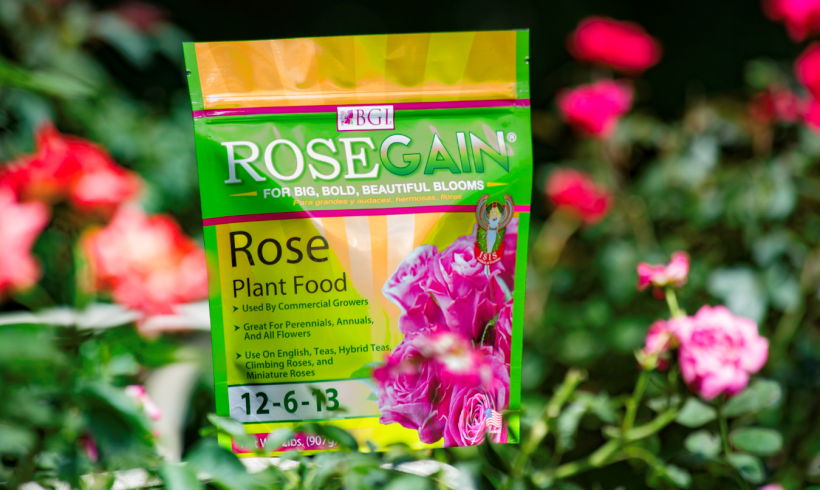
Select a rose-special fertilizer with micronutrients and apply monthly from mid-February through November in North and Central Florida, and year-round in South Florida. In summer, apply smaller amounts of fertilizer every two weeks, to prevent nutrients from leaching or washing away with the rain.
Read the label to determine the right amount of fertilizer to apply to each plant.
[/cmsms_text][cmsms_heading type=”h3″ font_weight=”400″ font_style=”normal” text_align=”default” target=”self” margin_top=”0″ margin_bottom=”20″ animation_delay=”0″]Pruning Roses[/cmsms_heading][cmsms_text animation_delay=”0″]
A major pruning should be done once a year, in January or February, though in South Florida pruning may be needed twice a year.
Remove any dead, dying, or crossing branches, and shorten the mature canes by one-third to one-half. You can also prune any stray branches to help improve the plant’s shape.
To avoid dieback and encourage rapid healing, make pruning cuts just above a dormant bud. When you remove an entire branch, make a smooth cut at the point of juncture. Expect your first flowers in eight to nine weeks.
[/cmsms_text][cmsms_heading type=”h3″ font_weight=”400″ font_style=”normal” text_align=”default” target=”self” margin_top=”0″ margin_bottom=”20″ animation_delay=”0″]Cutting Roses[/cmsms_heading][cmsms_text animation_delay=”0″]
Gardeners love roses in part because they can be brought inside and enjoyed as beautiful cut flowers. Follow a few basic tips to create long-lasting bouquets and to keep your rose bushes healthy and looking their best.
Start with a pair of sharp pruning shears that have been cleaned with alcohol to prevent the spread of diseases. Wear gloves to protect your hands from thorns. Choose a bloom and make your cut one-quarter of an inch above a leaf that has five leaflets. This will help the plant produce a healthy new shoot later.
Immediately place the stems of your cut roses in a bucket of warm water. Once you have enough blooms, bring them inside and arrange them in a vase filled with a mix of water and floral preservative.
[/cmsms_text][cmsms_heading type=”h1″ font_weight=”400″ font_style=”normal” text_align=”default” target=”self” margin_top=”0″ margin_bottom=”20″ animation_delay=”0″]Climbing Roses[/cmsms_heading][cmsms_text animation_delay=”0″]
Climbing roses can add color and fragrance to the landscape. This type of rose is more a sprawler than a vine; they don’t have any natural mechanism to climb, so you must train them to grow over fences, arbors or trellises.
They come in a huge variety of colors, and can have single or double blooms. Some varieties that are well-suited to Florida include Rosa banksiae, (cultivars: ‘Lutea’ and ‘Alba’) and Rosa laevigata (cultivars: ‘Crépuscule’, ‘Fellemberg’, ‘Maréchal Neil’, ‘Don Juan, ‘Blossomtime’, ‘Catherine Nelson’, ‘Spectra’).
Climbing roses should be tended like any other kind of rose. Amend the soil with lots of organic matter and fertilize the plant regularly. Climbing roses will need to be pruned to look their best. Some climbers bloom only once a year, and others flower throughout the season.
[/cmsms_text][cmsms_heading type=”h1″ font_weight=”400″ font_style=”normal” text_align=”default” target=”self” margin_top=”0″ margin_bottom=”20″ animation_delay=”0″]Miniature Roses[/cmsms_heading][cmsms_text animation_delay=”0″]Miniature roses may be small—their flowers are about the size of a dime or a quarter—but they come in almost every color of the rainbow. They need a high amount of light, so they’ll perform best if they’re grown outdoors. Plant in containers with rich, well-drained potting media, or in mixed borders. Just be sure to place them near the front so that they won’t disappear behind other plants—they’ll grow only 8 to 24 inches tall.[/cmsms_text][cmsms_text animation_delay=”0″](1) The information found within this article was provided by the University of Florida’s IFAS Extension. Visit http://gardeningsolutions.ifas.ufl.edu/plants/ornamentals/roses.html for more information.[/cmsms_text][/cmsms_column][/cmsms_row]
 A
A