Images

  • Feed Me: Featuring Tom Scannell, Owner of BGI

    Feed Me: Featuring Tom Scannell, Owner of BGI

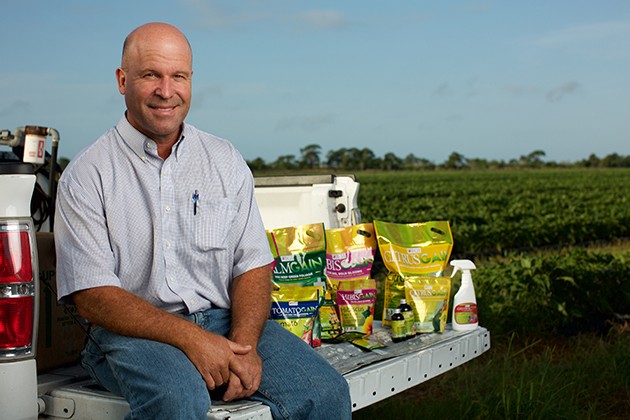
    A Business Observer Story by Jean Gruss 

    Bougainvillea plants are notoriously difficult to grow because of their sensitivity to water and weak root system.

    So when commercial nurseries saw the beauty of Tom Scannell’s bougainvillea, they started buying what he was feeding his plants. “We just used it in-house for our own products,” Scannell says.

    Scannell’s plant-food sales have been so successful that Scannell got out of the bougainvillea-growing business in 2012. Today, Bougainvillea Growers International sells plant food such as BouGain and supplements such as SuperGain through retailers such as Home Depot and to horticulturalists at Busch Gardens and Disney World.

    Scannell declines to cite the company’s revenues, but he says his 67-acre bougainvillea farm posted gross revenues of $7 million a year, employed 94 people and had 17 delivery trucks before he sold it.

    Fact is, farming is risky business. “It only takes one bad season and you’re out,” Scannell says. By contrast, the plant-food business is more secure.

    Scannell developed the plant food himself, using his background as a commercial farmer and his degree in soil science from the University of Wisconsin at Madison. “I’ve tried hundreds of fertilizers,” he says.

    He gleaned the latest research from cutting-edge agriculture scientists at Cornell University, University of California-Davis and Michigan State University. “It’s like open-source code for ag,” he smiles.

    Scannell, who lives in St. James City, an agriculture hamlet on Pine Island in Lee County, says his company’s sales have doubled since 2012. He’s particularly excited about selling through Amazon.com, where he’s posted sales growth 262% year over year to March. “Our sales went through the roof,” he says.

    Gain fertilizers are attractively packaged in shiny bags that light up a usually dreary and smelly area of most garden centers. Scannell is fond of quoting a Home Depot buyer who once told him: “You’ve got to be showroom ready every day.”

    Scannell gained a foothold in Home Depot because he used to sell the company bougainvillea plants. “When we switched from live goods to hard goods, the relationship remained,” he says.

    Better known by its initials BGI, the company’s 4,000-square-foot warehouse in Cape Coral is stacked to the ceiling. Scannell says he needs double the space to expand. He’s considering a subscription service for fertilizer and supplements that can be sold with plants, among other ideas.

    But Scannell, 53, a busy father with seven daughters, wants to grow his company carefully and gradually. “I don’t want to compete with Scotts because I’ll lose,” he says. The Scotts Miracle-Gro Co. is the publicly traded goliath of the industry with $2.8 billion in annual sales. “My goal is to grow 20% a year,” Scannell says.

    Scannell has been there, done that. From 1986 to 2001, he borrowed to grow cotton, rice, soybeans, wheat and corn on 3,000 acres in Northeast Louisiana and Southeast Arkansas. But Scannell candidly confides why he’s not keen on debt or outside investors: “I don’t want to be told what to do,” he smiles.

    Follow Jean Gruss on Twitter @JeanGruss
    View the story on Business Observer’s Website

  • Happy 45th Anniversary Celebration of Earth Day from BGI

    Happy 45th Anniversary Celebration of Earth Day from BGI

    [cmsms_row][cmsms_column data_width=”1/1″][cmsms_text]

    5 Small Ways to Make a BIG Difference

    The history behind Earth Day is an interesting story. The first Earth Day celebration took place in 1970 uniting more than 20 million participants from colleges and universities, primary and secondary schools and hundreds of communities throughout the United States in the common mission of environmental reform.

    Today, Earth Day is now known as “the largest secular holiday in the world” and is celebrated in more than 192 countries with participation from 1 billion people each year! This annual event is a wonderful time to take a step back from our accustomed modern-day lives and remind ourselves of the importance of environmental protection and how we can each play an important role in protecting our Earth.

    Want to help? Here are a 5 simple things you can do in your home gardening practices year-round that can make a BIG difference!


    Earth Day Tip #1: Buy plants with biodegradable pots

    A simple, yet often forgotten method of sustainability are biodegradable pots. Our day-to-day containers are just simply not good for the environment. Plastics and papers can end up in landfills when not properly recycled or reused. Even worse, these items out live humans and exist in the environment for thousands of years, where they indefinitely become harmful to nature and wildlife.

    What can you do? Biodegradable pots are available in your local nursery and garden centers. Natural, hygienic and fully biodegradable, these pots can be planted right along with your plants and flowers!

    Earth Day Tip #2: Conserve Water where possible (harvest rainwater)

    There are many ways to conserve water resources by harvesting rainwater, from more sophisticated methods to simple and inexpensive ways.

    What can you do?  Divert rainfall from its journey into the storm drains by this simple method: Connect a barrel with pipes through the gutters on your roof to collect this supplemental water that normally goes to waste and use it to water indoor plants and landscaping during times of low rainfall!

    Earth Day Tip #3: Support Local Farmers

    This is an easy one; every city has local farmers markets. The food found at a local farmers market is not only better for you and the environment, it is often less expensive than the grocery store! In addition, this food aids in the support local families whose main source of income is their farm.

    What can you do?  Simply shop at your local Farmers Market! Local food markets use less electricity than traditional grocery stores and typically utilize the natural outdoor areas to showcase products to shoppers. These markets also help build a community and is a great activity for families to enjoy together that promotes overall health and wellbeing.

    Earth Day Tip #4: Use Native and Indigenous plants

    Landscaping with native wildflowers and grasses can help improve the environment. How you ask? These are the plants native to your environment and thrive in the climate that naturally exists. These plants reduce maintenance of water and more importantly, decrease the need for herbicides and pesticides.

    What can you do?  Ask your local garden center what plants are best for your area, thereby reducing the natural resources and herbicides and pesticides needed.

    Earth Day Tip #5: Attract birds and friendly bugs

    Did you know? Naturally attracting beneficial garden bugs and birds is a great way to avoid the use of pesticides that may be dangerous to the environment and our overall health. These creatures create a wonderful balance in your garden and often eliminate the unwanted types of bugs in your garden that cause the most damage.

    What can you do? At BGI, we suggest creating a backyard bird-friendly habitat with a variety of plants, trees, vines and shrubs that create a variety of food offerings. This will also provide a place where birds can take comfort. Visit your local garden center to check out the options available for attracting the desired birds and bugs.

    [/cmsms_text][/cmsms_column][/cmsms_row]