Category: All Purpose

  • The Fruit That Took Over the World

    The Fruit That Took Over the World

    [cmsms_row data_width=”boxed” data_padding_left=”3″ data_padding_right=”3″ data_color=”default” data_bg_color=”#ffffff” data_bg_position=”top center” data_bg_repeat=”no-repeat” data_bg_attachment=”scroll” data_bg_size=”cover” data_bg_parallax_ratio=”0.5″ data_color_overlay=”#000000″ data_overlay_opacity=”50″ data_padding_top=”0″ data_padding_bottom=”50″][cmsms_column data_width=”1/1″][cmsms_image align=”left” animation_delay=”0″]6825|https://www.bgi-usa.com/wp-content/uploads/Tomatoes-4-300×300.jpg|medium[/cmsms_image][cmsms_text animation_delay=”0″]

    That’s right; we’re talking tomatoes. Tomatoes have become a global phenomenon in a relatively short amount of time. They’re in everything! Ketchup, marinara, bolognese, salsa, and much more. We also love eating tomatoes on sandwiches, burgers, tacos, pizzas, and even just a slice with a little salt on it. Tomatoes are a global phenomena. But, they can be a fickle mistress in the garden. So, we’re here to shine a light on best practices for growing the best and juiciest tomatoes you can.

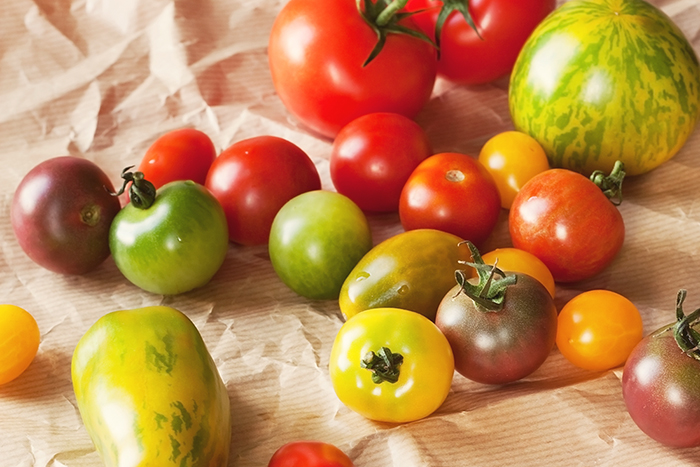
    First, let’s look at varieties. There are many different kinds of tomatoes such as heirloom, cherry, grape, beefsteak, Brandywine, big boy, cocktail, Roma, and tomatoes on the vine, to name a few. And, they come in all different colors from white to purple, red, yellow, green, and even stripes. Each of these types of tomato has its own unique flavor profile and use in an enormous list of recipes and family dishes. But, where to begin when it comes to growing them? Well, it helps to have a little background information.

    [/cmsms_text][cmsms_heading type=”h4″ font_weight=”400″ font_style=”normal” text_align=”default” target=”self” margin_top=”0″ margin_bottom=”20″ animation_delay=”0″]Determinate vs. Indeterminate[/cmsms_heading][cmsms_text animation_delay=”0″]

    There are so many different varieties of tomatoes, but what matters is the type of plant you’re buying and how they grow throughout the season.

    [/cmsms_text][cmsms_image align=”right” animation_delay=”0″]6827|https://www.bgi-usa.com/wp-content/uploads/Tomatoes-2-300×300.jpg|medium[/cmsms_image][cmsms_text animation_delay=”0″]

    There are what are called determinate tomatoes, which bloom and set fruit all at once and then decline. Their blossoms grow at the ends of shoots. These plants then stop growing and are usually compact plants that require no pruning and little staking. One exception to this rule is what we call, “vigorous” determinants, which produce such large fruit that they need support, like a trellis or fence.

    Another type of plant is called, you may have guessed, indeterminate tomatoes. These are the vines that are in for the whole summer. They continue to grow and to produce tomatoes throughout the growing season because the flowers grow along the vines rather than at the ends. Since they don’t come to a determined point but grow until stopped by cold weather or a pair of clippers (hence their name), they, too, generally need to be supported or pruned regularly.

    [/cmsms_text][cmsms_heading type=”h4″ font_weight=”400″ font_style=”normal” text_align=”default” target=”self” margin_top=”0″ margin_bottom=”20″ animation_delay=”0″]The Six Degrees of Tomato Care[/cmsms_heading][cmsms_image align=”left” animation_delay=”0″]6185|https://www.bgi-usa.com/wp-content/uploads/The-Quest-for-Flavorful-Tomatoes-pic-300×300.png|medium[/cmsms_image][cmsms_text animation_delay=”0″]

    The major difference between these types of plants is going to be growing time and, therefore nutrition requirements. As a vine-ripened fruit, all tomatoes require high levels of nutrients. Different varieties grow best in various climates. There are six requirements for growing tomatoes, and the first of course is sunlight. Tomatoes require a minimum of eight hours of sunlight a day. Secondly, they need three to four months of fairly consistent temperatures (between 55 and 75 degrees Fahrenheit), and they prefer a relatively dry season. Third, tomatoes prefer even and continuous watering. The soil should be kept moist, meaning not too wet or too dry. If you’re experiencing particularly dry weather, it’s recommended that you deep water them at least once a week.

    The fourth requirement is continuous feeding. As previously stated, tomatoes need a LOT of nutrients to produce their best. For this we recommend our Tomatogain. Tomatogain is specifically formulated to give your plants all the nutrients they require including slow-release nitrogen, so the plant is not overwhelmed. Number five on the list is drainage. Tomatoes like loose, well-drained soil so that moisture and nutrients can travel freely, and the plant’s growth is not restricted. We recommend a sandy loam for early tomatoes such as determinate varieties and a clay loam for indeterminate varieties which are late growers.

    [/cmsms_text][cmsms_image align=”right” animation_delay=”0″]6828|https://www.bgi-usa.com/wp-content/uploads/Tomatoes-1-300×300.jpg|medium[/cmsms_image][cmsms_text animation_delay=”0″]

    The sixth and final requirement on the list is protecting the leaves and roots. Protecting the leaves from extreme temperature changes can be difficult; however, to avoid this, tomatoes can be successfully grown indoors in either a garden box or hydroponically. In a hydroponic setup, you can regulate the temperature, hours of UV exposure, and nutrient flow far better than growing in a garden.

    No matter where decide to plant your tomatoes, it is critical that the plant receives the necessary amount of nutrients, and, for that, we highly recommend that you employ Tomatogain. With Tomatogain, you can rest assured that your plants are getting the appropriate levels of nutrients in precise measurements. For the casual home-grower or the avid gardener, Tomatogain’s got what you need.

    Happy growing!

    [/cmsms_text][cmsms_image align=”left” animation_delay=”0″]6784|https://www.bgi-usa.com/wp-content/uploads/BGI-Blog-logo-300×91.png|medium[/cmsms_image][/cmsms_column][/cmsms_row]

  • A Bountiful Life Springs from the Garden

    A Bountiful Life Springs from the Garden

    [cmsms_row data_padding_bottom=”50″ data_padding_top=”0″ data_overlay_opacity=”50″ data_color_overlay=”#000000″ data_bg_parallax_ratio=”0.5″ data_bg_size=”cover” data_bg_attachment=”scroll” data_bg_repeat=”no-repeat” data_bg_position=”top center” data_bg_color=”#ffffff” data_color=”default” data_padding_right=”3″ data_padding_left=”3″ data_width=”boxed”][cmsms_column data_width=”1/1″][cmsms_image align=”left” animation_delay=”0″]6843|https://www.bgi-usa.com/wp-content/uploads/BGI-blog-pic-1-300×300.jpg|medium[/cmsms_image][cmsms_heading type=”h2″ font_weight=”400″ font_style=”normal” text_align=”default” target=”self” margin_top=”0″ margin_bottom=”20″ animation_delay=”0″]A Bountiful Life Springs from the Garden[/cmsms_heading][cmsms_heading type=”h5″ font_weight=”400″ font_style=”normal” text_align=”default” target=”self” margin_top=”0″ margin_bottom=”20″ animation_delay=”0″]Stay Fit, Stay Happy, and Build a Community in Your Yard[/cmsms_heading][cmsms_text animation_delay=”0″]

    In recent years, we’ve heard a lot about the mal-effects of sitting for long periods, coupled with large quantities of food devoid of nutritional benefits. To combat the health risks of a modern lifestyle, we highly recommend gardening.

    [/cmsms_text][cmsms_heading type=”h5″ font_weight=”400″ font_style=”normal” text_align=”default” target=”self” margin_top=”0″ margin_bottom=”20″ animation_delay=”0″]How Can Gardening Help my Health?[/cmsms_heading][cmsms_image align=”right” animation_delay=”0″]6840|https://www.bgi-usa.com/wp-content/uploads/BGI-blog-pic-3-300×300.jpg|medium[/cmsms_image][cmsms_text animation_delay=”0″]

    Gardening is not only a great way to bring healthy produce into your home, but it’s also a fantastic way to stay active. There are many health benefits that come as a result of gardening, both physical and mental.

    Physical benefits of working a garden include consistent physical activity. Gardening requires walking, lifting, digging, standing, crouching, and bending over, sometimes, for long periods; these activities specifically enhance a person’s cardiovascular system, flexibility, and overall physical endurance. Less apparent may be the benefits to one’s grip strength and dexterity, and the creation of endorphins in the brain. Studies show that a lifetime of exercise and movement is the best choice for maintaining one’s health. As gardening is mainly an outdoor activity, gardeners also benefit from exposure to the sun, which is the greatest natural source of vitamin D.

    Working in a garden for thirty minutes, five days a week has been linked to lower risk of heart disease and stroke. And, for people with chronic leg or back pain, there are many ways to modify your garden to make it more manageable, such as creating raised beds or by building vertical garden boxes. These are just two of the ways that individuals with limited mobility can help themselves stay active and continue doing what they love.

    [/cmsms_text][cmsms_heading type=”h5″ font_weight=”400″ font_style=”normal” text_align=”default” target=”self” margin_top=”0″ margin_bottom=”20″ animation_delay=”0″]A Tended Garden Breeds a Fertile Mind[/cmsms_heading][cmsms_image align=”left” animation_delay=”0″]6841|https://www.bgi-usa.com/wp-content/uploads/BGI-blog-pic-2-300×300.jpg|medium[/cmsms_image][cmsms_text animation_delay=”0″]

    As previously stated, gardening not only helps to maintain physical health but also aids in maintaining your mental health. Studies indicate that tending a garden helps to combat depression and loneliness. When one tends a garden, they are caring for themselves but also the living plants in that garden. Modern society severely undervalues the importance of having something to care for and building routines outside of work. Tending a garden offers us the chance to fulfill both of these requirements. Plants are living things, and it’s been proven that the more time we spend surrounded by living things, the less lonely we feel. Over time, we build relationships with our gardens and care for their health as we would our friends and family, and, of course, nurturing our gardens results in nuritioning our loved ones.

    Time spent outdoors relieves stress and helps to regulate emotions. Many rehabilitation facilities incorporate gardening into their programming to help their patients find a new outlet. This same principle applies to everyone. Tending a garden can be a release of pent-up stress from work, strained relationships, or the loss of a loved one. Though a garden will never replace the love that we received from those we’ve lost, it can provide us with a distraction from our grief. Working the soil helps us to work through our pain, and spending time in the sun has the effect of brightening our day.

    Beyond the personal health benefits of a garden, a bountiful harvest can help feed a community. Giving the gift of nourishment to our neighbors is a great way to build strong relationships and strengthen our community. A bountiful life springs from the garden.

    [/cmsms_text][/cmsms_column][/cmsms_row]

  • How to Diagnose Your Plants Nutrient Deficiency

    How to Diagnose Your Plants Nutrient Deficiency

    [cmsms_row][cmsms_column data_width=”1/1″][cmsms_text]

    If you suspect your plant is lacking vigor, color or appears weak and growing abnormally, chances are nutrient deficiency is the culprit. It is necessary to examine the specific symptoms and the growing environment. Soil, water and tissue testing will not only confirm the cause but will also recommend corrective actions. BGI recently introduced diagnostic testing and recommendations to address these very issues our customers may face.

    Nutrient deficiency symptoms are broadly categorized by location on the plant: old growth and new growth.

    OLD GROWTH:

    • Nitrogen Deficiency: Uniform yellowing of entire surface of older, lower leaves.
    • Phosphorous Deficiency: Lower older leaves appear purple or dramatically smaller and greener.
    • Potassium Deficiency: Lower leaves exhibit chlorosis (yellowing) or marginal necrosis (death) that may occur along the entire leaf surface.
    • Magnesium Deficiency: Interveinal chlorosis on the older leaves usually beginning along the margin.

    NEW GROWTH:

    • Iron Deficiency: Uniform interveinal chlorosis on upper leaves and new growth.
    • Manganese Deficiency: Symptoms are almost identical to Iron deficiency. Interveeinal necrotic spots may form as well.
    • Boron Deficiency: New shoot (Meristem) growth will abort, fall off and cause abnormal growth habit and distorted branching.
    • Calcium Deficiency: New growth foliage exhibits marginal necrosis and chlorosis. Leaves often become misshapen.

    Diagnostic soil testing not only confirms the deficiency, or in some cases the toxicity problem, you can become proactive and avoid future nutritional problems. It can also indicate potential pH problems, where adequate nutrients might be in the soil but are unavailable.

    In South Florida, even though soil nutrient levels may be adequate, Iron and Manganese still are often the deficiency culprits. This is because our high alkaline soils and ground water cause these nutrients to become insoluble and unavailable. Please note they are essential micro nutrients. This means they are absolutely necessary (essential) but in lesser amounts (micro). A soil test and corrective pH application would resolve the deficiency problem.

    So to all of our plant Doctor diagnosticians out there; if you detect a problem, diagnose the symptoms and take corrective action. Even better, like the men and women that grow professionally, take periodic samples and avoid poor growth and sickly plants all together.

    After it’s all said and done, it’s true but trite: An ounce of prevention is worth a pound of cure. I like to think of it as preventative health care, i.e. avoid the hospital at all costs!

    Get your soil tested today. BGI can help.

    I hope this blog helps, and we at BGI wish only the best success for you and yours!

    Take care,

    Tom

    [/cmsms_text][/cmsms_column][/cmsms_row]

  • A Critical Key to Your Garden’s Success

    A Critical Key to Your Garden’s Success

    [cmsms_row][cmsms_column data_width=”1/1″][cmsms_text]

    Unlocking the potential to a successful garden begins with soil testing. This entails taking representative physical soil samples within your garden or landscape to determine the pH level and nutrient content.

    WHY SOIL TEST?

    First, to create a beautiful garden or prolific plants; like a high performance athlete your garden requires specific nutrients in specific amounts at critical growth stages. If you don’t test, how are you going to know?

    Second, to protect the environment, available soil nutrient levels and plant needs must be known. To not test and not know invites the probability of over fertilizing or creating nutrient imbalances. This results in added expense and potential environmental degradation to our waterways and aquifers.

    Third, to obtain maximum plant health, proper nutrient ratios or correct relative amounts to one another must be maintained. Without testing, this is impossible. Incorrect nutrient balance ends up in poor plant performance, aesthetics and yield. Plant toxicity and nutrient runoff can result. Avoid these pitfalls.

    Fourth, pH or the measure of the soil’s acidity is critical in determining nutrient availability. Most vegetables and ornamentals prefer a slightly acid soil pH 6-7. Iron and Manganese deficiencies are common in vegetable and ornamental plants in high alkaline or high pH soils. If your pH is not correct, nutrients become less available. Why fertilize if it’s not available? How are you going to know? Test.

    Fifth, plants require 17 essential nutrients to maintain proper growth and development. In plant nutrient management there is “Liebig’s Law.” This law simply states that yield is proportional to the amount of the most limiting nutrient, whichever nutrient it may be. How are you going to be sure no nutrients are limiting without a test?

    BMP’s

    Universities and commercial growers have developed over the last 20 years what we call “Best Management Practices” or BMP’s. At the top of the BMP list is soil testing. Higher profitability, higher quality plants, increased efficiencies, reduced potential pollution are reasons professionals test regularly.

    SIMPLE

    Achieving success be it color or beauty or big fat juicy tomatoes is simply a matter of following a few common sense practices. One of those practices is soil testing. You don’t have to be a soil scientist, a chemist or plant pathologist to reap your landscape and garden rewards, but you do have to take soil tests and utilize the recommendations.

    In conclusion,

    What doesn’t get measured doesn’t get done is an old saying in the business world, and it is true in nutrient management as well. To not spend more money than necessary; to avoid creating chemical and nutrient imbalances in the soil; to not potentially degrade the environment; and to have the most beautiful garden and landscape possible – regular soil testing is required. It is simple and the “ROI” is huge!

    Because soil testing is such a significant practice in our customer’s success, BGI now offers complete soil testing services and recommendations. I strongly urge everyone to soil test and test regularly. It is a critical key in growing success – just ask any professional or commercial grower. Learn more about finding out what your garden needs by reaching out to BGI. Soil testing is a BMP, and one step closer to creating that beauty we all long for! After all,

    “Beauty seen makes the one who sees it more beautiful.” David Steindl-Rast

    Take care and get tested!

    Tom

    [/cmsms_text][/cmsms_column][/cmsms_row]